
Which technique to choose for your project?
Your vector logo is ready, and you’ve already chosen the garments or accessories to bring your brand to life… but you’re stuck at the most crucial stage: the printing method. Between traditional techniques and new digital technologies, it’s easy to get lost.
Does your design require the ruggedness of screen printing or the photographic precision of Direct-to-Film (DTF) transfer? To help you see more clearly and make the best choice for your projects at Groupe Synapse, we’ve broken down these two essential methods.
What is Screen Printing?
Screen printing (also known as sérigraphie) is a method that creates vivid and durable prints on a wide variety of materials. Whether you’re personalizing t-shirts, creating artistic posters, or branding promotional items, this technique remains a gold standard.
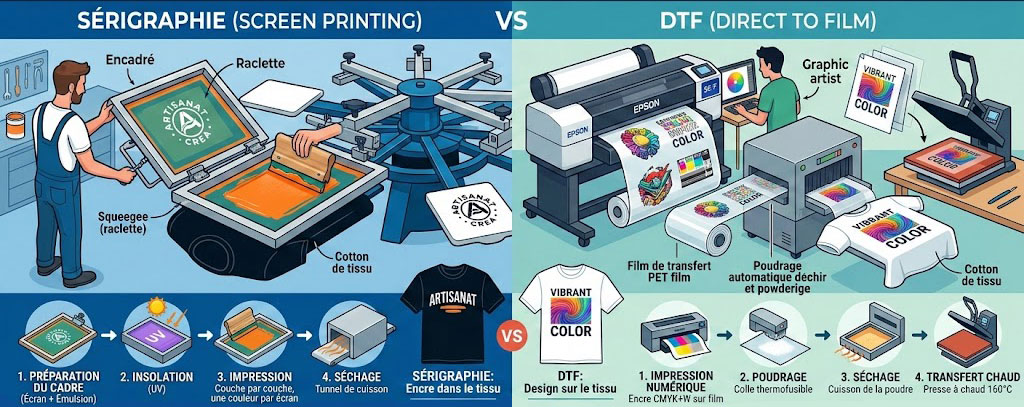
- Design Creation: The motif is designed on a computer (or by hand) and separated by color (one file per color for multicolored designs).
- Screen Preparation: A frame stretched with mesh (nowadays polyester) is coated with a photosensitive emulsion.
- Exposure (Insolation): A transparent film (positives) with the black design is placed on the coated screen and exposed to UV light. Exposed areas harden, while covered areas remain soluble.
- Rinsing: The screen is washed with water; the unhardened parts wash away, creating the stencil.
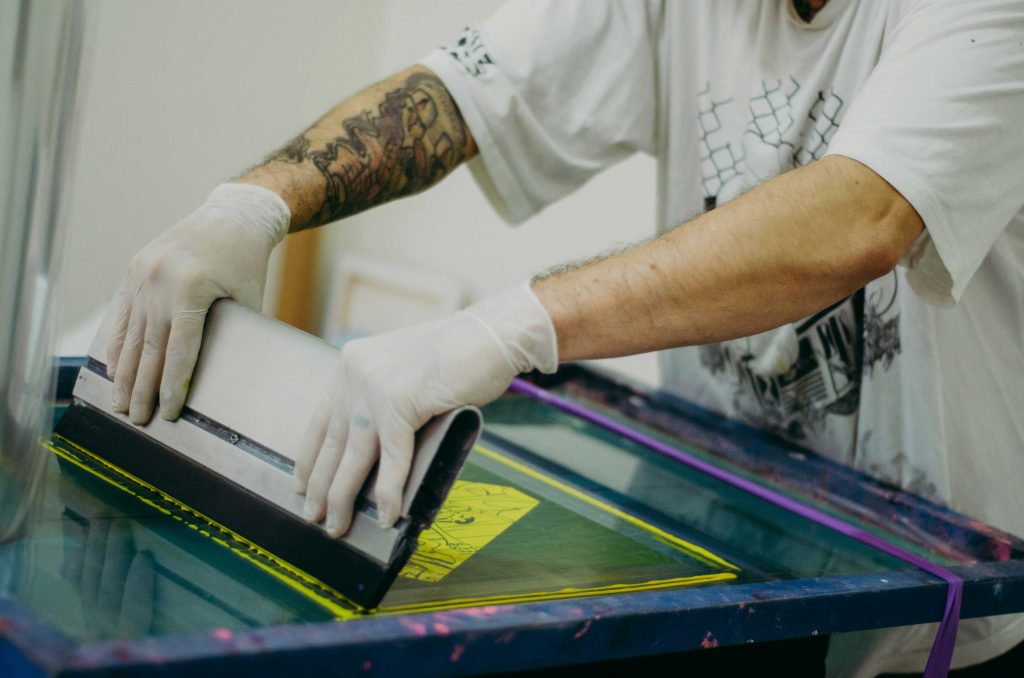
- Printing: The screen is placed on the substrate, ink is applied, and a squeegee is used to push the ink through the open mesh. For multiple colors, the process is repeated with a different screen for each color.
- Drying and Curing: The ink is air-dried or cured in a dryer to become wash-resistant for textiles.
Advantages
- Durability: Thick inks withstand time and repeated washing.
- Vivid Colors: A heavy ink deposit ensures intense, opaque results.
- Versatility: Works on almost any surface, even curved ones.
The downsides? It is less suitable for very small quantities (minimum of 24 at Groupe Synapse) or complex designs with many colors.
At Groupe Synapse, we know every project is unique. If screen printing doesn’t meet your design’s needs (too many colors or too small a quantity), we don’t compromise on quality: we switch to DTF Transfer.
What is Direct-to-Film (DTF) Transfer?
Heat transfer is a textile marking technique that involves transferring a design (text, logo, image) onto fabric using heat and pressure.
How does it work?
- The design is printed or cut onto a special medium (vinyl, flex, flock, transfer paper, or DTF film).
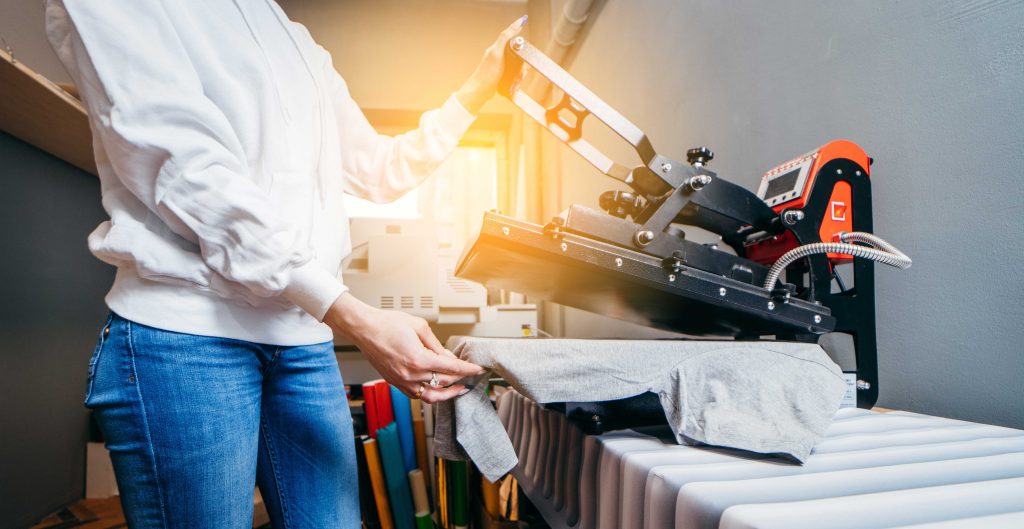
At Groupe Synapse, we use printable transfer (DTF), which allows for complex multicolored prints, photos, or gradients. - This medium is then applied to the textile using a heat press.
- The heat activates the adhesive, and the design is permanently bonded to the fabric.
Advantages
- Versatile: Works on cotton, polyester, blends, and even non-textile items (caps, bags).
- Quantity: Perfect for small batches or prototypes, with no high minimum order requirements.
- Resistant: Exceptional wash fastness (up to 90°C for some) with no cracking.
- Professional Finish: Vivid colors and crisp outlines.
The downsides? You must follow care instructions (wash inside out, avoid high-temperature dryers).
The Verdict: Which Technique to Choose?
In summary, the choice depends primarily on your design and the desired quantity:
- Screen Printing: a high-volume order (24 units or more) with one or few solid colors and for ultimate durability.
- DTF Transfer: for small runs, multicolored logos, or detailed photos that require production flexibility.
No matter the method, the most important thing is that your brand image shines.
Still have doubts about the ideal technique for your next project? Contact our team at Groupe Synapse: we would be happy to advise you to ensure a result that meets your expectations!